
What Defines a Design Suite with Spa?
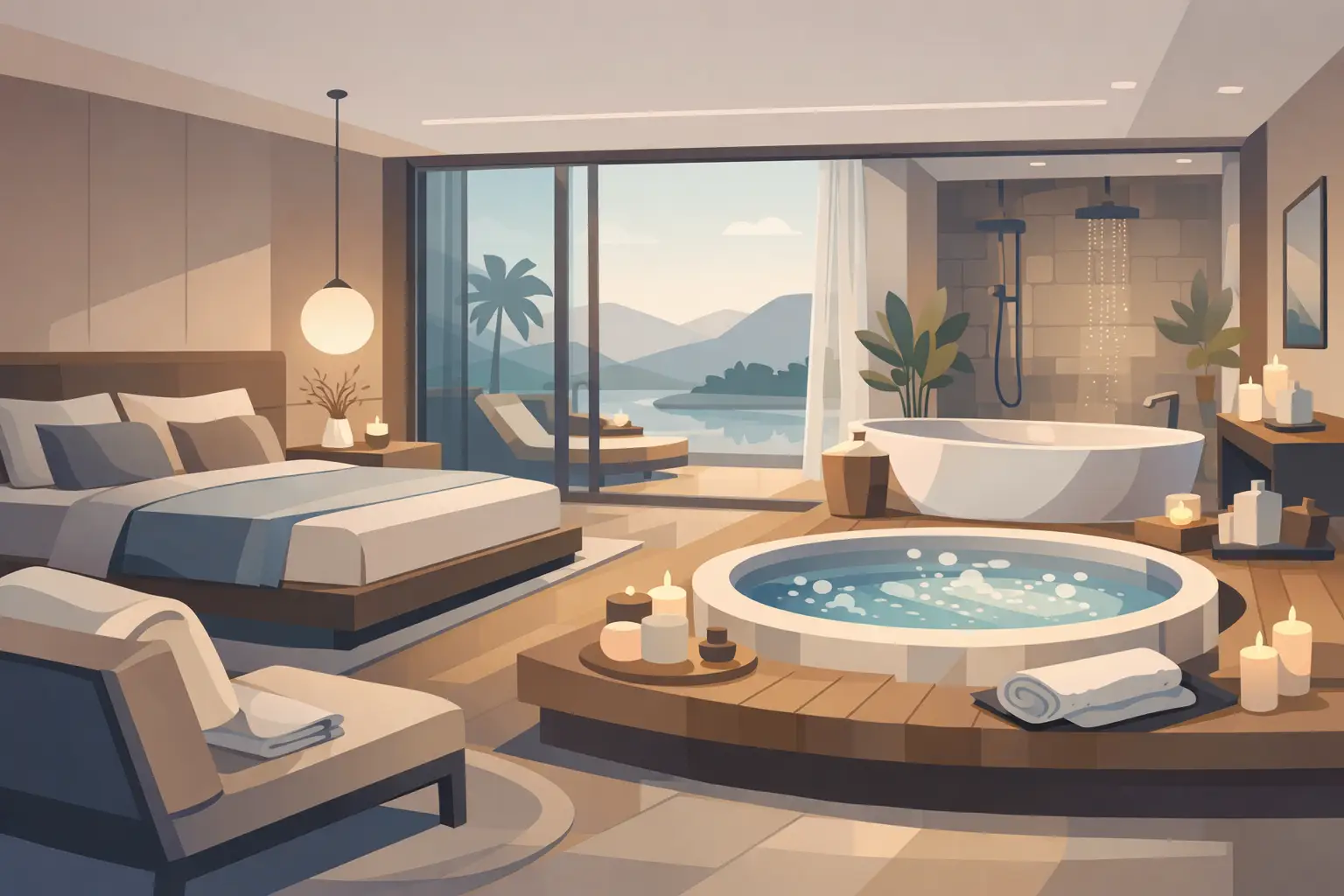
A standard luxury room can impress in a glance. A true design suite with spa reveals its value more slowly - in the hush of private space, in materials chosen with discipline, in the feeling that nothing has been left to chance. For guests who no longer confuse abundance with refinement, that distinction matters.
The phrase itself is often used too casually. In many properties, “spa” means shared access down the hall, and “design” suggests little more than trend-aware furniture and flattering lighting. But when both elements are treated seriously, the result is not simply a higher category of accommodation. It becomes a different form of hospitality altogether: more intimate, more restorative, and considerably more difficult to execute well.
What a design suite with spa should actually offer
At its highest level, a design suite with spa is not a decorated room with wellness add-ons. It is a private environment conceived around physical ease, aesthetic coherence, and emotional decompression. The guest should feel that the architecture, the furnishings, the sensory atmosphere, and the wellness features belong to one vision.
That means design is not cosmetic. It is spatial intelligence. Proportions matter. Sightlines matter. The transition from lounge to sleep area to wellness zone should feel natural, almost instinctive. Good design does not demand attention at every turn. It creates a sense of order that lets the nervous system settle.
The spa element follows the same logic. Real private wellness is not a token amenity placed for effect. It is a protected experience integrated into the suite itself - one that allows guests to move through water, warmth, rest, and quiet without exposure, scheduling, or interruption. Privacy is not an accessory to the experience. It is the condition that makes the experience meaningful.
Design suite with spa versus traditional luxury hotel
For some travelers, the distinction becomes obvious only after they have experienced both. A traditional luxury hotel can offer prestige, polished service, and excellent facilities. It can also carry a certain social choreography: public lobbies, elevator traffic, spa booking windows, ambient noise, and the subtle fatigue of being surrounded by other people.
A design suite with spa answers a different desire. It is for guests who want the standards of luxury without the theater of hospitality constantly in view. Instead of circulating through shared spaces, they remain inside a private world shaped around their own rhythm. Morning begins without hallway noise. Evening does not depend on spa closing times. The atmosphere belongs entirely to the stay.
This is especially relevant for couples, high-performing professionals, and discreet travelers who value restoration as much as aesthetics. They are not looking for entertainment in the conventional sense. They are looking for relief from exposure, compression, and overstimulation.
That said, the hotel model still suits travelers who want multiple restaurants, social energy, or a broad menu of on-site activity. Privacy-first hospitality is not better in every case. It is better for those who consider silence, control, and intimacy part of the luxury itself.
The role of interiors in a true wellness stay
In a credible design-led suite, interiors do more than photograph well. They regulate mood. Materials with depth and tactility - natural stone, warm wood, tailored textiles, brushed metals, muted surfaces - create a level of comfort that synthetic glamour rarely achieves. The eye rests more easily in rooms where restraint has been exercised.
Italian design, in particular, has long understood this balance. The best spaces combine precision and softness, statement and calm. Iconic pieces can exist without turning the suite into a showroom. Technology can be present without becoming visually intrusive. The result feels edited rather than crowded, which is exactly what sophisticated guests tend to notice.
Lighting deserves special attention. In many luxury spaces, lighting is bright enough to flatter the architecture but too rigid to flatter the experience. In a private suite with spa, layered lighting is essential. Guests should be able to move from morning clarity to evening warmth, from wellness ritual to dining ambience, without ever feeling trapped in a single mood.
Acoustics matter just as much. Thick doors, thoughtful zoning, quiet systems, and soft sound absorption are rarely celebrated in marketing copy, yet they define whether a suite truly protects rest. A room can look exquisite and still feel restless if sound has not been controlled with equal care.
Why private spa access changes the stay
The psychological effect of private wellness is often underestimated. Shared spa facilities may be beautiful, but they still require timing, presentation, and a degree of social awareness. Even the most elegant communal environment asks the guest to leave their private state and re-enter a public one.
A design suite with spa removes that friction. The body relaxes differently when there is no audience, no transit, and no interruption between desire and access. A soak at midnight, a slow start in the morning, a pause after dinner - these moments become spontaneous rather than scheduled. That freedom changes the emotional texture of the stay.
For couples, the benefit is obvious. Privacy deepens connection. For solo travelers under pressure, the effect can be even more pronounced. Without external choreography, personal rituals return: stillness, reading, reflection, sleep, conversation, silence. The suite begins to function not as a place to pass through, but as a temporary refuge for the senses.
Of course, not every guest wants an all-private format. Some travelers enjoy the social energy of a destination spa or the variety of hotel amenities. But for those who spend much of life visible, reachable, and managed by a calendar, exclusive wellness inside the suite can feel less like indulgence and more like necessity.
What discerning guests notice first
Experienced luxury travelers rarely judge by a single signature feature. They read the entire environment. Is the space generous enough to breathe in, or merely expensive per square foot? Does the wellness area feel architecturally integrated, or appended for marketing appeal? Are the furnishings chosen with authorship, or assembled from recognizable trends?
They also notice what is absent. Visual noise. Clutter. Branded overexposure. Operational friction. A truly elevated stay often feels quieter than expected, because the property has removed everything that competes with comfort.
Service follows the same standard. In this category, excellent hospitality is rarely theatrical. It is precise, anticipatory, and discreet. Guests should feel supported without feeling observed. Concierge, in-suite dining, transfer arrangements, and personalized rituals all add value, but only if they preserve the sense of autonomy. Luxury loses some of its allure when it becomes performative.
This is where a carefully conceived property can distinguish itself from both five-star hotels and premium rentals. The guest is not choosing between design and service, or between privacy and support. They are choosing a place where all of those elements have been disciplined into one coherent experience.
How to recognize a credible design suite with spa
The best way to assess a property in this category is to look beyond adjectives. Ask how the space is actually organized. Is the suite large enough to sustain separate moods - lounging, sleeping, dining, wellness - without compromise? Are the spa features fully private and directly accessible? Is the design language consistent from architecture to furnishings to guest touchpoints?
It is also worth paying attention to curation. Premium hospitality is often defined by editing, not excess. A suite of substantial scale, limited to two guests, says something very different from a larger-capacity property trying to serve every occasion at once. So does the presence of iconic but measured design, selected technology, and service options tailored to the guest rather than broadcast to the crowd.
Properties such as ShangriLux, conceived as private spa suites rather than adapted hotel rooms, reflect this more exacting philosophy. The difference is not only in square footage or amenities, though both matter. It is in the way the entire stay has been composed around discretion, sensory quality, and control.
For guests visiting Turin or seeking a refined retreat near the city, this format offers a compelling alternative to more visible luxury. It replaces public opulence with intimacy, and standard hospitality with a rarer kind of care.
The most memorable stays do not compete for attention. They create the conditions in which attention can finally soften, and the guest can do the same.
Richiedi il Dossier di ShangriLux.
Specifiche tecniche e dettagli riservati sul design e i servizi della suite.
I tuoi dati sono trattati con la massima riservatezza.